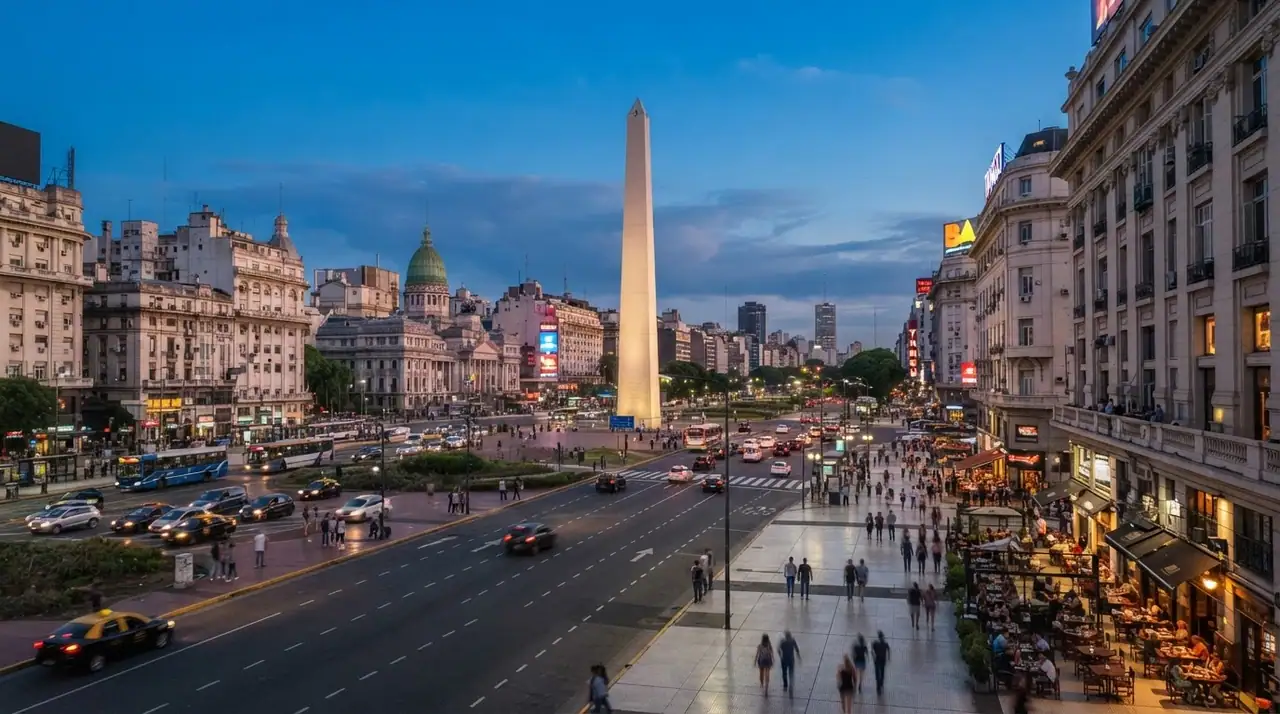
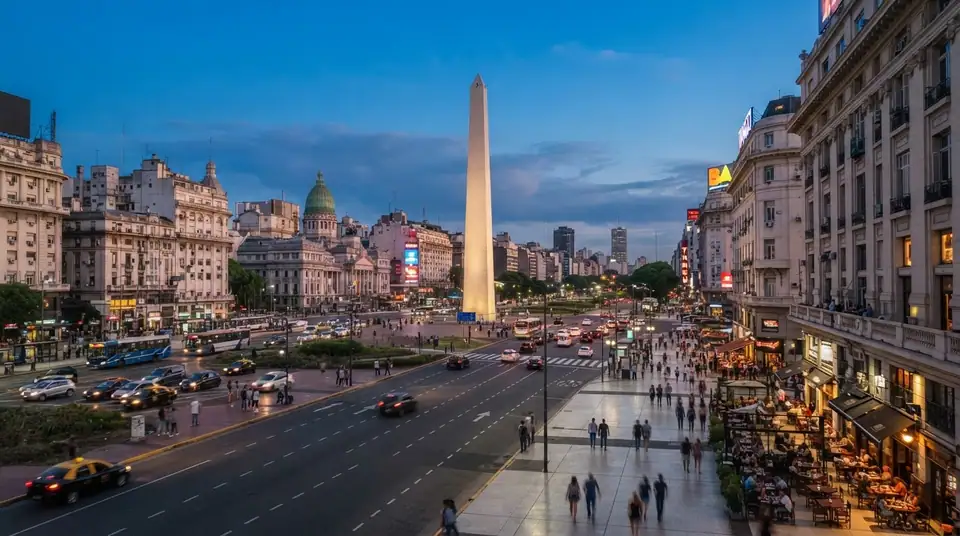
January in Buenos Aires: strong conditions, 7th of 12
Good · 7.8/10January averages 25°C (77°F) — pleasant for mornings and evenings on foot in the city, with a midday break when the sun is strongest.
Rainfall runs 67 mm, so plan one flexible day in three; you still get about 29 days with 6+ hours of sunshine and 14.2 hours of daylight.
It scores 7.8/10 here, 7th of 12 months, against 9.2/10 in the destination's best month.
Plan for mid-season pricing, with crowds are moderate.
Pack light clothing, a hat and real sun protection, a packable rain layer.
February holds up well in Buenos Aires — 11th best month
Good · 7.5/10February averages 24°C (75°F) — pleasant for mornings and evenings on foot in the city, with a midday break when the sun is strongest.
Monthly rainfall reaches 100 mm — wet for this destination — but about 26 days with 6+ hours of sunshine still break through, so keep one indoor fallback in the plan.
It scores 7.5/10 here, 11th of 12 months, against 9.2/10 in the destination's best month.
Plan for low-season pricing, with crowds are light for this destination.
Pack light clothing, a hat and real sun protection, a proper rain shell rather than an umbrella.
Flexible dates? October scores 1.7 points higher here — enough to change the trip.
March in Buenos Aires: mixed conditions, plan around the weather
Trade-offs · 6.9/10At 22°C (72°F) this is comfortable city weather in March, with sightseeing easiest before lunch and after the afternoon peak.
193 mm of rain makes this a wet month here, though with about 26 days with 6+ hours of sunshine there is still bright weather between the fronts.
That is 6.9/10 on the same scale — 12th of 12 months, versus 9.2/10 for the best month here.
Budget for low-season pricing, and crowds are light for this destination.
Pack light clothing, a hat and real sun protection, a proper rain shell rather than an umbrella.
If your dates are flexible, October is materially better in Buenos Aires — 2.3 points higher on the same scale.
April in Buenos Aires: strong conditions, 8th of 12
Good · 7.8/10April averages 18°C (64°F), the range most people find easiest for walking a city all day without either overheating or losing daylight to weather.
Rainfall runs 100 mm, so plan one flexible day in three; you still get about 25 days with 6+ hours of sunshine and 11.2 hours of daylight.
It scores 7.8/10 here, 8th of 12 months, against 9.2/10 in the destination's best month.
Figure on mid-season pricing, with crowds are moderate.
Pack layers you can shed by midday plus one warm layer for the evening, a packable rain layer.
May in Buenos Aires: strong conditions, 10th of 12
Good · 7.7/10Temperatures hover around 14°C (57°F) — the kind of month where neither heat nor cold forces the schedule.
Budget for roughly 84 mm of rain this month — a flexible day or two helps — with about 25 days with 6+ hours of sunshine and 10.3 hours of daylight to work around it.
That is 7.7/10 on the same scale — 10th of 12 months, versus 9.2/10 for the best month here.
Expect low-season pricing, and crowds are light for this destination.
Pack layers you can shed by midday plus one warm layer for the evening, a packable rain layer.
June in Buenos Aires — one of the year's strongest windows (3rd)
Best window · 8.5/10June averages 11°C (52°F) — jacket weather. Comfortable for walking and museums, too cool for anything water-based.
Expect 27 mm of rain — occasional showers rather than washed-out days — alongside about 23 days with 6+ hours of sunshine and 9.9 daylight hours.
A 8.5/10 puts this among the year's best months in Buenos Aires (3rd of 12); only October scores higher, at 9.2/10.
Figure on mid-season pricing, with crowds are moderate.
Pack a mid-weight jacket, long sleeves and shoes you can walk 15 km in.
July in Buenos Aires: strong conditions, 6th of 12
Good · 8.1/10July averages 11°C (51°F) — jacket weather. Comfortable for walking and museums, too cool for anything water-based.
Expect 42 mm of rain — occasional showers rather than washed-out days — alongside about 25 days with 6+ hours of sunshine and 10.1 daylight hours.
It scores 8.1/10 here, 6th of 12 months, against 9.2/10 in the destination's best month.
Plan for mid-season pricing, with crowds are moderate.
Pack a mid-weight jacket, long sleeves and shoes you can walk 15 km in.
August in Buenos Aires — reliably good (9th best month)
Good · 7.8/10Temperatures hover around 12°C (54°F) — the kind of month where neither heat nor cold forces the schedule.
Budget for roughly 77 mm of rain this month — a flexible day or two helps — with about 24 days with 6+ hours of sunshine and 10.9 hours of daylight to work around it.
That is 7.8/10 on the same scale — 9th of 12 months, versus 9.2/10 for the best month here.
Expect mid-season pricing, and crowds are moderate.
Pack layers you can shed by midday plus one warm layer for the evening, a packable rain layer.
September ranks 2nd of 12 for Buenos Aires — one of the best windows
Best window · 8.6/10Temperatures hover around 15°C (58°F) — the kind of month where neither heat nor cold forces the schedule.
Budget for roughly 70 mm of rain this month — a flexible day or two helps — with about 24 days with 6+ hours of sunshine and 11.9 hours of daylight to work around it.
On our climate-comfort scale this is one of the strongest months of the year for Buenos Aires at 8.6/10 (2nd of 12), just behind October at 9.2/10.
Budget for mid-season pricing, and crowds are moderate.
Pack layers you can shed by midday plus one warm layer for the evening, a packable rain layer.
October in Buenos Aires — the year's strongest window
Best window · 9.2/10October averages 18°C (64°F), the range most people find easiest for walking a city all day without either overheating or losing daylight to weather.
Rainfall runs 62 mm, so plan one flexible day in three; you still get about 27 days with 6+ hours of sunshine and 13 hours of daylight.
On our climate-comfort scale this is the top-ranked month of the year for Buenos Aires at 9.2/10 — the reference point every other month on this page is measured against.
Figure on peak pricing, with crowds are moderate. You are paying the year's highest rates for the year's best conditions — book early or shift a few weeks either side.
Pack layers you can shed by midday plus one warm layer for the evening, a packable rain layer.
November in Buenos Aires — reliably good (4th best month)
Good · 8.4/10November averages 21°C (69°F) — pleasant for mornings and evenings on foot in the city, with a midday break when the sun is strongest.
Monthly rainfall reaches 104 mm — wet for this destination — but about 27 days with 6+ hours of sunshine still break through, so keep one indoor fallback in the plan.
It scores 8.4/10 here, 4th of 12 months, against 9.2/10 in the destination's best month.
Plan for mid-season pricing, with crowds are moderate.
Pack light clothing, a hat and real sun protection, a proper rain shell rather than an umbrella.
December in Buenos Aires — reliably good (5th best month)
Good · 8.4/10At 24°C (74°F) this is comfortable city weather in December, with sightseeing easiest before lunch and after the afternoon peak.
Budget for roughly 67 mm of rain this month — a flexible day or two helps — with about 30 days with 6+ hours of sunshine and 14.4 hours of daylight to work around it.
That is 8.4/10 on the same scale — 5th of 12 months, versus 9.2/10 for the best month here.
Budget for peak pricing, and crowds are moderate.
Pack light clothing, a hat and real sun protection, a packable rain layer.