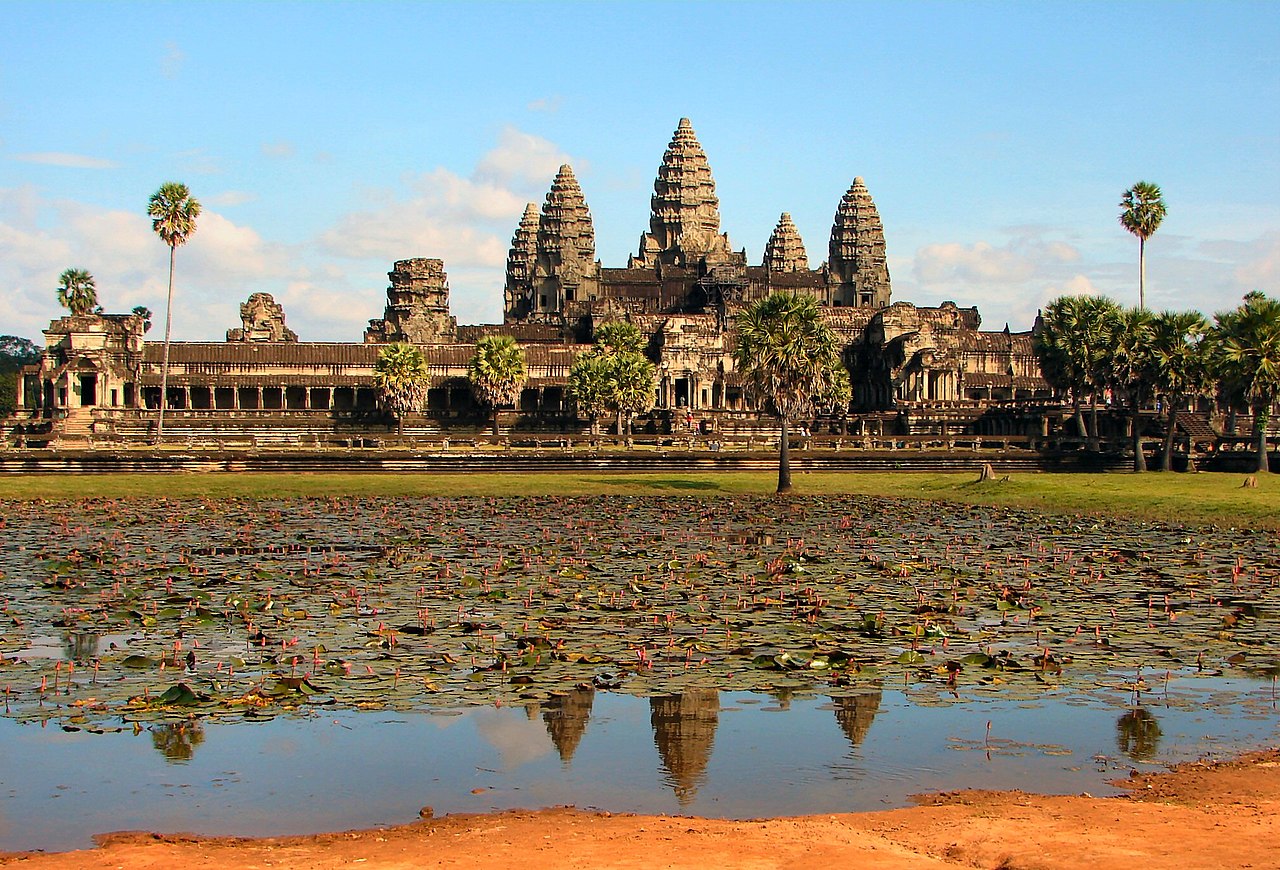
January in Angkor Wat: strong conditions, 2nd of 12
Good · 7.6/10January averages 27°C (81°F), so the practical pattern is early mornings, a long midday break, and evenings back outside.
Rain is a non-issue at 7 mm for the month, with about 21 days with 6+ hours of sunshine and 11.3 hours of daylight to work with.
It scores 7.6/10 here, 2nd of 12 months, against 7.8/10 in the destination's best month.
Plan for peak pricing, with this is one of the busiest months here. You are paying the year's highest rates for the year's best conditions — book early or shift a few weeks either side.
Pack the lightest breathable clothing you own, a hat, and more water than feels necessary.
February in Angkor Wat — middling scores, decent value
Trade-offs · 6.6/10February averages 30°C (85°F), so the practical pattern is early mornings, a long midday break, and evenings back outside.
Expect 37 mm of rain — occasional showers rather than washed-out days — alongside about 22 days with 6+ hours of sunshine and 11.6 daylight hours.
It scores 6.6/10 here, 4th of 12 months, against 7.8/10 in the destination's best month.
Plan for mid-season pricing, with crowds are moderate.
Pack the lightest breathable clothing you own, a hat, and more water than feels necessary.
March in Angkor Wat — workable with trade-offs
Trade-offs · 6.3/10Days in March average 31°C (88°F) — front-load outdoor plans before the heat builds and treat the middle of the day as indoor time.
With around 43 mm of rain, any showers tend to pass through rather than settle in; about 25 days with 6+ hours of sunshine and 11.9 hours of daylight fill the rest.
That is 6.3/10 on the same scale — 5th of 12 months, versus 7.8/10 for the best month here.
Budget for mid-season pricing, and crowds are moderate.
Pack the lightest breathable clothing you own, a hat, and more water than feels necessary.
If your dates are flexible, December is materially better in Angkor Wat — 1.5 points higher on the same scale.
April in Angkor Wat: mixed conditions, plan around the weather
Trade-offs · 6.2/10April averages 32°C (89°F), so the practical pattern is early mornings, a long midday break, and evenings back outside.
Rainfall runs 47 mm, so plan one flexible day in three; you still get about 26 days with 6+ hours of sunshine and 12.3 hours of daylight.
It scores 6.2/10 here, 6th of 12 months, against 7.8/10 in the destination's best month.
Figure on mid-season pricing, with crowds are moderate.
Pack the lightest breathable clothing you own, a hat, and more water than feels necessary, a packable rain layer.
Flexible dates? December scores 1.6 points higher here — enough to change the trip.
May in Angkor Wat — the hardest end of the year
Hardest · 3.7/10Days in May average 30°C (87°F) and humidity near 71% — front-load outdoor plans before the heat builds and treat the middle of the day as indoor time.
153 mm of rain makes this a wet month here, though with about 23 days with 6+ hours of sunshine there is still bright weather between the fronts.
That is 3.7/10 on the same scale — 10th of 12 months, versus 7.8/10 for the best month here.
Expect low-season pricing, and crowds are light for this destination.
Pack the lightest breathable clothing you own, a hat, and more water than feels necessary, a proper rain shell rather than an umbrella.
If your dates are flexible, December is materially better in Angkor Wat — 4.1 points higher on the same scale.
June in Angkor Wat: expect compromises
Hardest · 4.8/10June averages 29°C (84°F) and humidity near 79%, so the practical pattern is early mornings, a long midday break, and evenings back outside.
Monthly rainfall reaches 113 mm — wet for this destination — but about 24 days with 6+ hours of sunshine still break through, so keep one indoor fallback in the plan.
It scores 4.8/10 here, 8th of 12 months, against 7.8/10 in the destination's best month.
Figure on low-season pricing, with crowds are light for this destination.
Pack the lightest breathable clothing you own, a hat, and more water than feels necessary, a proper rain shell rather than an umbrella.
Flexible dates? December scores 3 points higher here — enough to change the trip.
July in Angkor Wat — the hardest end of the year
Hardest · 3.8/10July averages 28°C (83°F) and humidity near 82%, so the practical pattern is early mornings, a long midday break, and evenings back outside.
At 173 mm this is a genuinely wet month: about 19 days with 6+ hours of sunshine in total, and outdoor plans need an indoor fallback.
It scores 3.8/10 here, 9th of 12 months, against 7.8/10 in the destination's best month.
Plan for low-season pricing, with crowds are moderate.
Pack the lightest breathable clothing you own, a hat, and more water than feels necessary, a proper rain shell rather than an umbrella.
Flexible dates? December scores 4 points higher here — enough to change the trip.
August in Angkor Wat — off-season conditions
Hardest · 3.6/10Days in August average 28°C (83°F) and humidity near 82% — front-load outdoor plans before the heat builds and treat the middle of the day as indoor time.
This is the year's wettest stretch at 213 mm, but with about 23 days with 6+ hours of sunshine it is not a total loss; an indoor fallback covers the risk.
That is 3.6/10 on the same scale — 11th of 12 months, versus 7.8/10 for the best month here.
Expect low-season pricing, and crowds are moderate.
Pack the lightest breathable clothing you own, a hat, and more water than feels necessary, a proper rain shell rather than an umbrella.
If your dates are flexible, December is materially better in Angkor Wat — 4.2 points higher on the same scale.
September in Angkor Wat — off-season conditions
Hardest · 3.1/10Days in September average 28°C (82°F) and humidity near 86% — front-load outdoor plans before the heat builds and treat the middle of the day as indoor time.
Expect monsoon-level rainfall at 295 mm: only about 16 days with 6+ hours of sunshine across the month, and stretches of heavy rain are normal.
That is 3.1/10 on the same scale — 12th of 12 months, versus 7.8/10 for the best month here.
Budget for low-season pricing, and crowds are light for this destination.
Pack the lightest breathable clothing you own, a hat, and more water than feels necessary, a proper rain shell rather than an umbrella.
If your dates are flexible, December is materially better in Angkor Wat — 4.7 points higher on the same scale.
October in Angkor Wat — off-season conditions
Hardest · 4.9/10October averages 27°C (81°F) and humidity near 84%, so the practical pattern is early mornings, a long midday break, and evenings back outside.
At 115 mm this is a genuinely wet month: about 19 days with 6+ hours of sunshine in total, and outdoor plans need an indoor fallback.
It scores 4.9/10 here, 7th of 12 months, against 7.8/10 in the destination's best month.
Figure on low-season pricing, with crowds are light for this destination.
Pack the lightest breathable clothing you own, a hat, and more water than feels necessary, a proper rain shell rather than an umbrella.
Flexible dates? December scores 2.9 points higher here — enough to change the trip.
November in Angkor Wat: strong conditions, 3rd of 12
Good · 7/10November averages 27°C (81°F) and humidity near 78%, so the practical pattern is early mornings, a long midday break, and evenings back outside.
Expect 36 mm of rain — occasional showers rather than washed-out days — alongside about 19 days with 6+ hours of sunshine and 11.4 daylight hours.
It scores 7/10 here, 3rd of 12 months, against 7.8/10 in the destination's best month.
Plan for mid-season pricing, with crowds are moderate.
Pack the lightest breathable clothing you own, a hat, and more water than feels necessary.
December in Angkor Wat — the year's strongest window
Best window · 7.8/10Days in December average 27°C (80°F) — front-load outdoor plans before the heat builds and treat the middle of the day as indoor time.
At just 8 mm for the month, rain will not shape your plans; you get about 20 days with 6+ hours of sunshine and 11.2 hours of daylight.
On our climate-comfort scale this is the top-ranked month of the year for Angkor Wat at 7.8/10 — the reference point every other month on this page is measured against.
Budget for peak pricing, and this is one of the busiest months here. You are paying the year's highest rates for the year's best conditions — book early or shift a few weeks either side.
Pack the lightest breathable clothing you own, a hat, and more water than feels necessary.