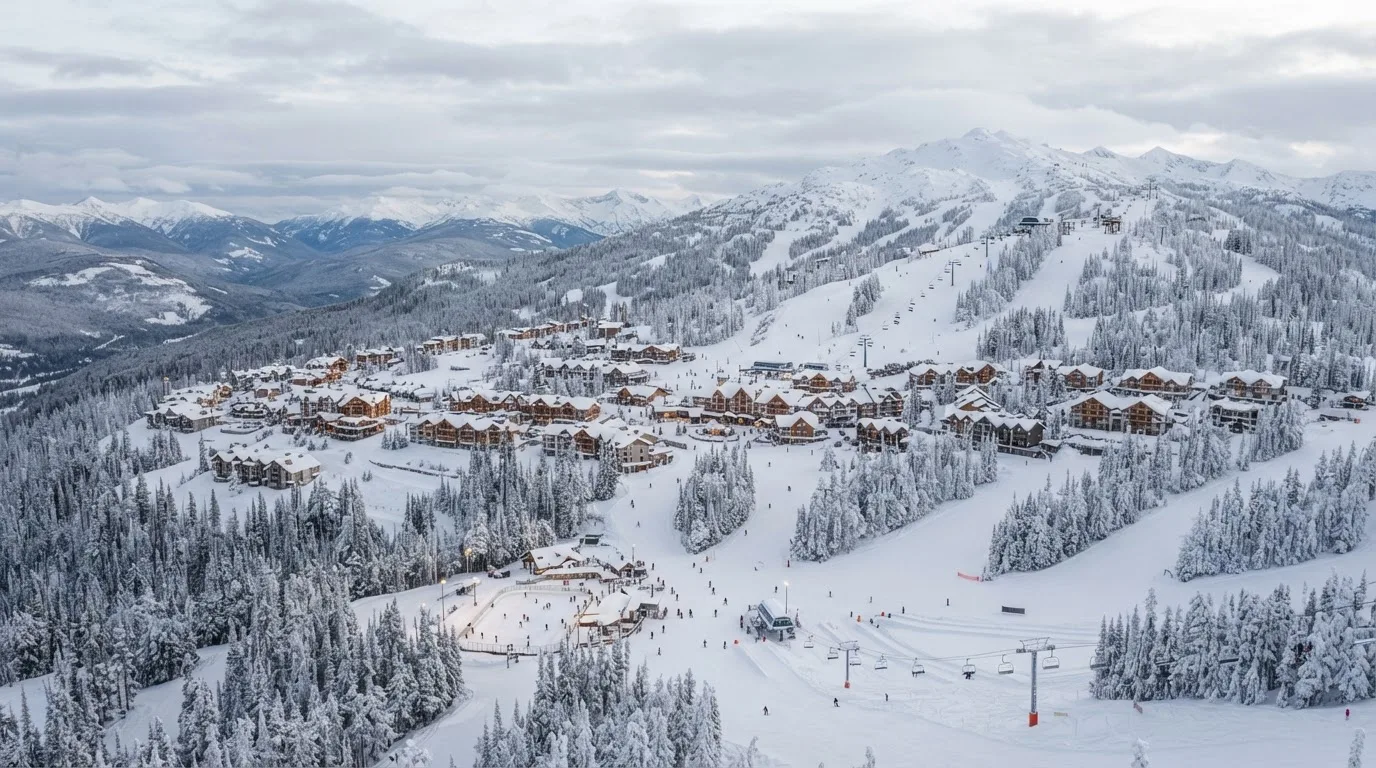
January in Whistler — one of the year's strongest windows (5th)
Best window · 8.9/10January sits at -5°C (22°F), firmly in deep-winter territory. Plan compact outdoor blocks with warm reset points between them rather than full days outside.
229 mm of water-equivalent precipitation makes this a snowy month at resort level; what falls stays as snow, with almost no days with 6+ hours of sunshine and 8.3 hours of daylight.
On our climate-comfort scale this is one of the strongest months of the year for Whistler at 8.9/10 (5th of 12), just behind April at 9.7/10.
Budget for peak pricing, and this is one of the busiest months here.
Pack insulated layers, a windproof shell, gloves and boots with grip, a waterproof shell rather than an umbrella, goggles and a helmet if you are not renting.
February in Whistler — one of the year's strongest windows (3rd)
Best window · 9.2/10February sits at -6°C (21°F), firmly in deep-winter territory. Plan compact outdoor blocks with warm reset points between them rather than full days outside.
130 mm of water-equivalent precipitation makes this a snowy month at resort level; what falls stays as snow, with almost no days with 6+ hours of sunshine and 9.8 hours of daylight.
On our climate-comfort scale this is one of the strongest months of the year for Whistler at 9.2/10 (3rd of 12), just behind April at 9.7/10.
Expect peak pricing, and this is one of the busiest months here. You are paying the year's highest rates for the year's best conditions — book early or shift a few weeks either side.
Pack insulated layers, a windproof shell, gloves and boots with grip, a waterproof shell rather than an umbrella, goggles and a helmet if you are not renting.
March is one of the strongest months in Whistler (2nd)
Best window · 9.4/10March averages -4°C (25°F), cold enough that sightseeing works in bursts rather than in one long day on foot.
At 125 mm of water-equivalent precipitation this is a snowy month at resort level — that is snowpack, not lost days — with about 5 days with 6+ hours of sunshine and 11.5 hours of daylight.
A 9.4/10 puts this among the year's best months in Whistler (2nd of 12); only April scores higher, at 9.7/10.
Plan for peak pricing, with this is one of the busiest months here. You are paying the year's highest rates for the year's best conditions — book early or shift a few weeks either side.
Pack insulated layers, a windproof shell, gloves and boots with grip, a waterproof shell rather than an umbrella, goggles and a helmet if you are not renting.
April: the best month of the year in Whistler
Best window · 9.7/10At -2°C (28°F) this is proper winter weather in April: layer up and split the day between outdoor highlights and indoor stops.
143 mm of water-equivalent precipitation makes this a snowy month at resort level; what falls stays as snow, with about 15 days with 6+ hours of sunshine and 13.5 hours of daylight.
On our climate-comfort scale this is the top-ranked month of the year for Whistler at 9.7/10 — the reference point every other month on this page is measured against.
Expect peak pricing, and this is one of the busiest months here. You are paying the year's highest rates for the year's best conditions — book early or shift a few weeks either side.
Pack insulated layers, a windproof shell, gloves and boots with grip, a waterproof shell rather than an umbrella, goggles and a helmet if you are not renting.
May in Whistler: expect compromises
Hardest · 2.1/10May averages 5°C (40°F) — jacket weather. Comfortable for walking and museums, too cool for anything water-based.
Monthly rainfall reaches 100 mm — wet for this destination — but about 22 days with 6+ hours of sunshine still break through, so keep one indoor fallback in the plan.
It scores 2.1/10 here, 7th of 12 months, against 9.7/10 in the destination's best month.
Figure on low-season pricing, with crowds are light for this destination.
Pack a mid-weight jacket, long sleeves and shoes you can walk 15 km in, a waterproof shell rather than an umbrella, goggles and a helmet if you are not renting.
Flexible dates? April scores 7.6 points higher here — enough to change the trip.
June in Whistler: expect compromises
Hardest · 1.7/10Expect 10°C (49°F) in June. A good month for city streets, viewpoints and long meals; leave swimming for another season.
102 mm of rain makes this a wet month here, though with about 23 days with 6+ hours of sunshine there is still bright weather between the fronts.
That is 1.7/10 on the same scale — 8th of 12 months, versus 9.7/10 for the best month here.
Budget for low-season pricing, and crowds are light for this destination.
Pack a mid-weight jacket, long sleeves and shoes you can walk 15 km in, a waterproof shell rather than an umbrella.
If your dates are flexible, April is materially better in Whistler — 8 points higher on the same scale.
July in Whistler: expect compromises
Hardest · 1.7/10Temperatures hover around 14°C (58°F) — the kind of month where neither heat nor cold forces the schedule.
With around 43 mm of rain, any showers tend to pass through rather than settle in; about 30 days with 6+ hours of sunshine and 15.8 hours of daylight fill the rest.
That is 1.7/10 on the same scale — 9th of 12 months, versus 9.7/10 for the best month here.
Expect low-season pricing, and crowds are light for this destination.
Pack layers you can shed by midday plus one warm layer for the evening.
If your dates are flexible, April is materially better in Whistler — 8 points higher on the same scale.
August in Whistler — off-season conditions
Hardest · 1.7/10August averages 14°C (58°F), the range most people find easiest for walking a city all day without either overheating or losing daylight to weather.
Rainfall runs 70 mm, so plan one flexible day in three; you still get about 21 days with 6+ hours of sunshine and 14.3 hours of daylight.
It scores 1.7/10 here, 10th of 12 months, against 9.7/10 in the destination's best month.
Plan for low-season pricing, with crowds are light for this destination.
Pack layers you can shed by midday plus one warm layer for the evening, a packable rain layer.
Flexible dates? April scores 8 points higher here — enough to change the trip.
September in Whistler: expect compromises
Hardest · 1.6/10September averages 10°C (50°F) — jacket weather. Comfortable for walking and museums, too cool for anything water-based.
Rainfall runs 77 mm, so plan one flexible day in three; you still get about 11 days with 6+ hours of sunshine and 12.4 hours of daylight.
It scores 1.6/10 here, 11th of 12 months, against 9.7/10 in the destination's best month.
Plan for low-season pricing, with crowds are light for this destination.
Pack a mid-weight jacket, long sleeves and shoes you can walk 15 km in, a packable rain layer.
Flexible dates? April scores 8.1 points higher here — enough to change the trip.
October in Whistler — off-season conditions
Hardest · 1.5/10Expect 5°C (40°F) in October. A good month for city streets, viewpoints and long meals; leave swimming for another season.
171 mm of rain signals a properly wet month, with only almost no days with 6+ hours of sunshine to count on — build indoor options into the schedule.
That is 1.5/10 on the same scale — 12th of 12 months, versus 9.7/10 for the best month here.
Expect low-season pricing, and crowds are light for this destination.
Pack a mid-weight jacket, long sleeves and shoes you can walk 15 km in, a waterproof shell rather than an umbrella, goggles and a helmet if you are not renting.
If your dates are flexible, April is materially better in Whistler — 8.2 points higher on the same scale.
November is one of the strongest months in Whistler (4th)
Best window · 9.1/10At -4°C (24°F) this is proper winter weather in November: layer up and split the day between outdoor highlights and indoor stops.
169 mm of water-equivalent precipitation makes this a snowy month at resort level; what falls stays as snow, with almost no days with 6+ hours of sunshine and 8.7 hours of daylight.
On our climate-comfort scale this is one of the strongest months of the year for Whistler at 9.1/10 (4th of 12), just behind April at 9.7/10.
Expect peak pricing, and this is one of the busiest months here.
Pack insulated layers, a windproof shell, gloves and boots with grip, a waterproof shell rather than an umbrella, goggles and a helmet if you are not renting.
December ranks 6th of 12 for Whistler — one of the best windows
Best window · 8.9/10December averages -5°C (23°F) — deep-winter cold that dictates the whole trip: short outdoor stints, indoor plans on standby, and no expectation of long walking days.
At 236 mm of water-equivalent precipitation this is a snowy month at resort level — that is snowpack, not lost days — with almost no days with 6+ hours of sunshine and 7.9 hours of daylight.
A 8.9/10 puts this among the year's best months in Whistler (6th of 12); only April scores higher, at 9.7/10.
Figure on peak pricing, with this is one of the busiest months here.
Pack insulated layers, a windproof shell, gloves and boots with grip, a waterproof shell rather than an umbrella, goggles and a helmet if you are not renting.