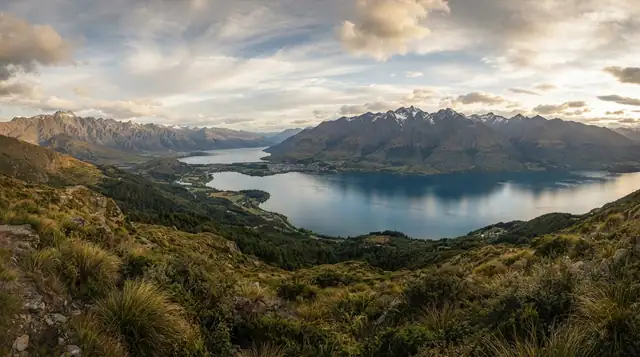
New Zealand spreads two long islands across the South Pacific, from subtropical bays in the north to the Southern Alps and fjords in the south, with Maori culture woven through both. Auckland, Rotorua's geothermal fields, Wellington, Queenstown and Milford Sound are among the best-known stops. The far north is mild and wet all year, while the south has colder winters and changeable weather; late spring to early autumn is the best stretch for hiking and road trips.
Warmest month: January (17°C). Wettest: February (159 mm). Best overall score: January (8.9/10).
| Month | Avg temp | Rain | Sunny days | Score |
|---|---|---|---|---|
| January | 17°C | 52 mm | 31 | 8.9/10 |
| February | 17°C | 159 mm | 23 | 6.9/10 |
| March | 15°C | 76 mm | 18 | 8.0/10 |
| April | 14°C | 74 mm | 7 | 6.9/10 |
| May | 13°C | 88 mm | 0 | 5.7/10 |
| June | 12°C | 77 mm | 0 | 5.6/10 |
| July | 10°C | 152 mm | 0 | 4.1/10 |
| August | 10°C | 121 mm | 3 | 5.0/10 |
| September | 11°C | 108 mm | 11 | 6.1/10 |
| October | 12°C | 80 mm | 23 | 7.7/10 |
| November | 14°C | 76 mm | 30 | 8.1/10 |
| December | 16°C | 89 mm | 31 | 8.0/10 |
New Zealand. Live activities and tours from GetYourGuide, matched to this destination.
Climate data: Open-Meteo ERA5 historical archive, the five most recent complete years (2021–2025). Scores are monthly averages for that window, not forecasts, and short-window precipitation can differ from longer-term normals. “Sunny days” count days with at least 6 hours of measured sunshine — they are not dry days.
Curated in New Zealand